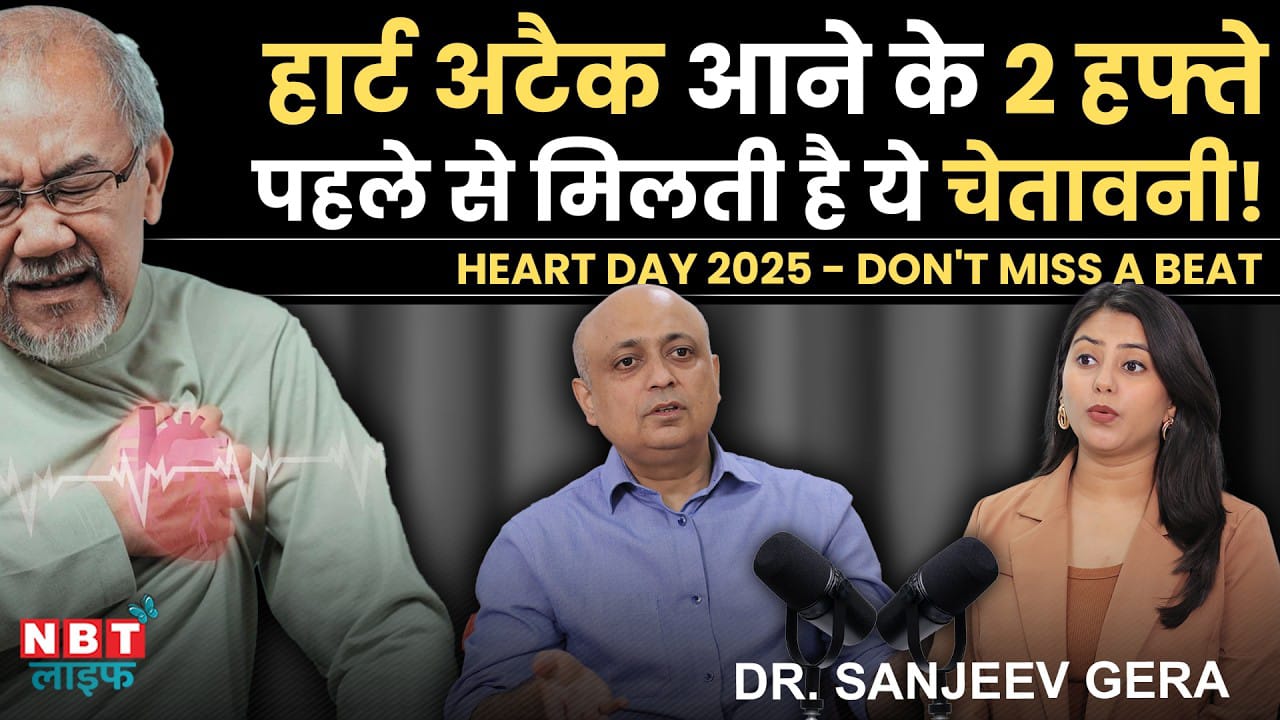
Heart disease does not always begin with a dramatic heart attack.
Very often, the body gives warning signs beforehand. The problem is that these signals are easy to dismiss as gas, acidity, tiredness, stress, ageing or lack of sleep.
A person who could climb three floors comfortably a few months ago may suddenly start feeling breathless after one floor. Someone who normally walks for 30 minutes may begin developing chest heaviness after 10 minutes. A woman may experience unexplained fatigue, nausea or sweating rather than classic chest pain.
These changes matter.
According to Dr. Sanjeev Gera, Senior Director & HOD – Cardiology at Fortis Hospital, Noida, recognising cardiovascular symptoms early is one of the most important ways to prevent a developing heart problem from becoming a life-threatening emergency.
This article explains the warning signs of heart disease, who is at higher risk, how diabetes, blood pressure, cholesterol, smoking, stress and lifestyle affect the heart, and when symptoms mean you should go to a hospital without delay.
One of the biggest misconceptions about heart attacks is that they always happen suddenly without warning.
Some certainly do.
But many patients experience symptoms days, weeks or even months before a major cardiac event.
The problem is that they may ignore them.
A patient may say:
“I thought it was gas.”
Or:
“I thought I was just tired from work.”
Or:
“It only happened when I climbed stairs, so I didn’t think it was serious.”
When a new symptom repeatedly appears during physical activity and improves with rest, it deserves particular attention.
Heart-related discomfort does not always feel like a sharp pain.
Patients commonly describe:
The discomfort is often spread across a broader area rather than being limited to one tiny point.
It may also travel to the:
If you develop new chest pressure during walking or exertion—especially if it improves when you stop and rest—it should be evaluated.
Imagine you can sit comfortably without any symptoms.
But when you:
you develop chest tightness.
When you stop, it disappears.
This pattern can occur with angina, which means that the heart muscle is not receiving enough oxygen-rich blood during increased activity.
Angina should not be ignored because it can indicate significant coronary artery disease.
Sometimes there is no obvious chest pain.
The clue is simply that your body can no longer perform activities it could manage comfortably before.
For example:
You could climb three floors without difficulty.
You become breathless after one floor.
Or:
You could walk 30 minutes.
You feel exhausted after 10 minutes.
A new reduction in exercise capacity deserves evaluation, especially when you have cardiovascular risk factors.
Shortness of breath is not always caused by the lungs.
Heart conditions can also cause:
Sudden or unexplained breathlessness, particularly when associated with chest pressure or sweating, can be an emergency.
One symptom that should never be casually ignored is new unexplained cold sweating.
Suppose you are sitting or sleeping and suddenly develop:
That combination may represent a cardiac emergency.
Do not simply take an acidity medicine and wait for hours.
Women can absolutely experience classic chest pain during a heart attack.
However, some women experience less typical symptoms.
These may include:
A woman may think:
“It’s probably acidity.”
But if these symptoms are new, unusual, persistent or associated with cardiovascular risk factors, cardiac evaluation may be necessary.
Heart-related discomfort and acidity can sometimes feel surprisingly similar.
Both may cause:
This is why repeatedly treating new symptoms with over-the-counter acidity medication can be dangerous.
Be more cautious when the symptoms:
If you are uncertain, it is safer to get evaluated.
During a heart attack, a coronary artery may suddenly become blocked.
Heart muscle supplied by that artery begins losing oxygen.
The longer the blockage remains untreated, the greater the potential damage.
This is why cardiologists often say:
The aim is to restore blood flow before a large amount of heart muscle is permanently injured.
Delayed treatment can lead to a larger area of damaged heart muscle.
This may reduce the heart’s pumping function and potentially result in:
Recognising symptoms early can therefore have a major impact on long-term quality of life.
Seek urgent medical attention if you develop:
Do not spend hours trying multiple home remedies.
An electrocardiogram (ECG) records the electrical activity of the heart.
In an emergency, it can quickly provide important information about:
Blood tests such as cardiac troponin may also be required.
A normal first ECG does not necessarily rule out every cardiac problem, so doctors interpret the ECG together with symptoms and other investigations.
Coronary arteries can gradually develop deposits known as atherosclerotic plaques.
Some plaques may remain stable for years.
But if a plaque becomes unstable and ruptures, the body can form a blood clot at that site.
If the clot suddenly blocks blood flow, a heart attack can occur.
This is why the percentage of narrowing is not the entire story.
A plaque that was previously not causing severe symptoms can sometimes become unstable.
Heart disease usually develops because of several risk factors acting together.
Important risk factors include:
South Asian populations, including Indians, have a substantial burden of:
Heart disease can also appear at younger ages than many people expect.
This makes early prevention particularly important.
Instead of assuming “I am only 35, so it cannot be my heart,” adults should know their major risk factors.
Family history can increase cardiovascular risk.
If your:
developed premature coronary disease, your own risk may be higher.
You cannot change your genetics.
But you can modify:
That is where prevention becomes powerful.
Diabetes is one of the strongest cardiovascular risk factors.
High blood glucose can damage blood vessels and accelerate atherosclerosis.
Diabetes is frequently associated with:
All of these can further increase cardiovascular risk.
Many people say:
“I don’t have diabetes. My sugar is only borderline.”
But prediabetes is an important opportunity for prevention.
At this stage, lifestyle improvements may help delay or prevent progression to diabetes.
Important changes include:
High blood pressure places continuous stress on the cardiovascular system.
Over time, uncontrolled hypertension can contribute to:
And importantly:
That is why monitoring matters.
For many adults, a blood pressure around 120/80 mmHg is considered a healthy reference point.
However, treatment targets vary according to:
If repeated readings are elevated, discuss them with your doctor rather than dismissing them as “stress.”
People often look at the laboratory reference range and assume:
“My LDL is marked normal, so everything is fine.”
But LDL targets are individualised.
Someone with no major cardiovascular risk factors may have a different target from someone who has:
Patients with established cardiovascular disease often require much more aggressive LDL lowering.
A patient may see a low LDL result after treatment and think:
“My cholesterol is excellent now. I can reduce the medicine.”
That may be exactly the wrong conclusion.
The cholesterol may be low because the medication is working.
Never stop or reduce statins or other prescribed cardiac medicines without discussing it with your cardiologist.
Smoking is particularly concerning in younger patients.
It can:
A young smoker should not assume age protects them from a heart attack.
Stopping tobacco is one of the most powerful cardiovascular interventions available.
Excess body fat—particularly around the abdomen—is strongly associated with metabolic risk.
It can increase the likelihood of:
You do not need to obsess over the scale every day, but you should notice whether:
Small changes noticed early are easier to address.
Compared with previous generations, many people today experience a combination of:
Individually, each factor may seem small.
Together, over many years, they can create an unhealthy cardiovascular environment.
Stress should not be blamed for every heart attack.
But chronic psychological stress can affect cardiovascular health.
It may contribute to:
Severe acute stress can also place significant strain on the cardiovascular system in susceptible individuals.
The key point is that stress often amplifies existing risk factors.
Sleep is not simply downtime.
Poor or irregular sleep can influence:
Most adults should aim for roughly 7–9 hours of regular, restorative sleep.
People working night shifts should be particularly careful to protect adequate sleep duration and quality.
Air pollution is increasingly recognised as a cardiovascular risk factor.
Fine particulate matter can contribute to:
You may not be able to completely eliminate exposure to pollution.
But you can avoid adding additional preventable risks such as smoking.
Frequently consuming highly processed foods can contribute to:
Instead, prioritise more home-prepared foods containing:
Occasional indulgence is very different from making processed food your everyday diet.
Lifestyle modification can significantly reduce cardiovascular risk.
However, patients should be careful with claims that lifestyle can simply “erase” all existing coronary blockages.
Treatment aims to:
Some patients will also require medicines, angioplasty or surgery depending on the severity of disease.
You do not need an expensive gym membership to become more active.
Walking is accessible to most people.
It can help improve:
You can accumulate activity throughout the day.
For example:
You do not need to chase a magical step number.
Not every healthy adult needs every possible cardiac test every year.
Preventive evaluation should be based on individual risk.
At a minimum, adults should periodically know:
Further testing may be considered depending on symptoms and risk.
A treadmill test evaluates how the heart responds to exercise.
It may be useful in selected patients with:
It is not a routine screening test for every healthy adult.
An echocardiogram can assess:
It is useful when clinically indicated but does not directly show all coronary artery blockages.
A coronary artery calcium scan is a CT-based test that detects calcified plaque in coronary arteries.
It may help refine cardiovascular risk in selected people.
It is not necessary for everyone.
Your cardiologist can determine whether it would add useful information in your situation.
Chest pressure, heaviness or tightness—particularly during activity—is one of the most important symptoms.
No.
Heart-related discomfort may occur:
Yes.
Heart-related symptoms and indigestion can overlap.
New or persistent symptoms associated with exertion, sweating or breathlessness should not be dismissed as gas.
Yes.
Some patients experience:
without dramatic chest pain.
Women can have classic chest pain, but some experience more subtle symptoms such as:
Yes, particularly when associated with chest discomfort, sweating or other cardiovascular symptoms.
Yes.
However, dizziness has many possible causes.
New dizziness associated with chest pain, palpitations, breathlessness or fainting requires prompt assessment.
Angina is chest discomfort or related symptoms caused by insufficient blood supply to the heart muscle, usually during increased demand.
No.
Stable angina may occur without an active heart attack.
However, worsening or newly occurring angina needs prompt medical evaluation.
For example, if you previously developed chest pain only after climbing three floors but now experience it after one floor, the change may indicate worsening disease.
Stress alone is not responsible for every heart attack, but severe or chronic stress may contribute to cardiovascular risk, particularly in someone with existing risk factors.
Smoking is dangerous at every age.
It is an especially important risk factor in younger patients presenting with premature coronary events.
Diabetes significantly increases cardiovascular risk and can accelerate coronary artery disease.
Prediabetes increases the likelihood of progressing to diabetes and is an important opportunity for preventive lifestyle changes.
Blood-pressure targets should be individualised.
For many adults, values around 120/80 mmHg are a healthy reference, but people with medical conditions should follow their doctor’s recommended target.
It depends on your risk.
Patients with established cardiovascular disease generally require lower LDL levels than people without cardiovascular risk factors.
Not without your doctor’s advice.
The medication may be responsible for maintaining that low level.
Yes.
Exercise lowers cardiovascular risk but does not eliminate genetics, diabetes, hypertension or abnormal cholesterol.
Yes.
Heart attacks are less common in young adults but can occur, particularly when strong risk factors are present.
Yes.
Excess weight—especially abdominal obesity—is associated with diabetes, hypertension and other metabolic risks.
There is no universal step target.
Aim for regular physical activity appropriate for your health and fitness.
People with established cardiovascular disease should follow their cardiologist’s exercise advice.
No.
Ten thousand is not a magical threshold.
Substantial health benefits can occur with lower step counts, especially when increasing activity from a sedentary baseline.
The frequency depends on:
Your physician or cardiologist can recommend an appropriate interval.
No.
It should be ordered when there is a clinical reason.
No.
An ECG does not directly visualise coronary arteries and can sometimes be normal even in patients with coronary disease.
It measures calcified plaque burden and helps estimate coronary risk in selected individuals.
It does not replace coronary angiography when an acute blockage is suspected.
A large proportion of cardiovascular risk can be reduced by addressing modifiable factors such as:
No strategy guarantees complete prevention, but risk reduction can be substantial.
Treat it as potentially serious.
Seek urgent medical attention rather than repeatedly trying home remedies.
One of the most dangerous mistakes is delaying hospital evaluation because the symptoms are assumed to be gas, acidity or stress.
Walk regularly, eat well, avoid tobacco, control weight, monitor blood pressure, sugar and cholesterol, and do not ignore new symptoms.
Your heart may warn you before a major cardiac event.
The warning may be obvious:
But it may also be subtle:
The key is to recognise what has changed from your normal.
If you could comfortably perform an activity a few weeks ago and suddenly cannot, pay attention.
If chest discomfort appears with exercise and improves with rest, get evaluated.
And if chest heaviness, severe breathlessness, cold sweating or fainting develops suddenly:
At the same time, prevention begins long before symptoms.
Know your:
Avoid smoking, remain physically active, reduce processed foods, sleep adequately and attend appropriate preventive check-ups.
Your genes may influence your cardiovascular risk, but many of the factors that determine what happens next are still within your control.
Dr. Sanjeev Gera
MBBS, MD (Medicine), DNB – Cardiology
FESC, MACC
Senior Director & HOD – Cardiology
Interventional & Preventive Cardiology
Fortis Hospital, Noida
B-22, Sector 62
Gautam Buddh Nagar
Noida, Uttar Pradesh – 201301
84477 17722
900 900 1050
Medical Disclaimer: This article is intended for general educational and awareness purposes only. Heart symptoms and cardiovascular risk differ from person to person. Do not use this article to diagnose a medical emergency. If you develop persistent chest pressure, severe breathlessness, cold sweating, fainting or symptoms suggestive of a heart attack, seek urgent medical care.
 +(91)9810466173
 info@drsanjeevgeracardiologist.com