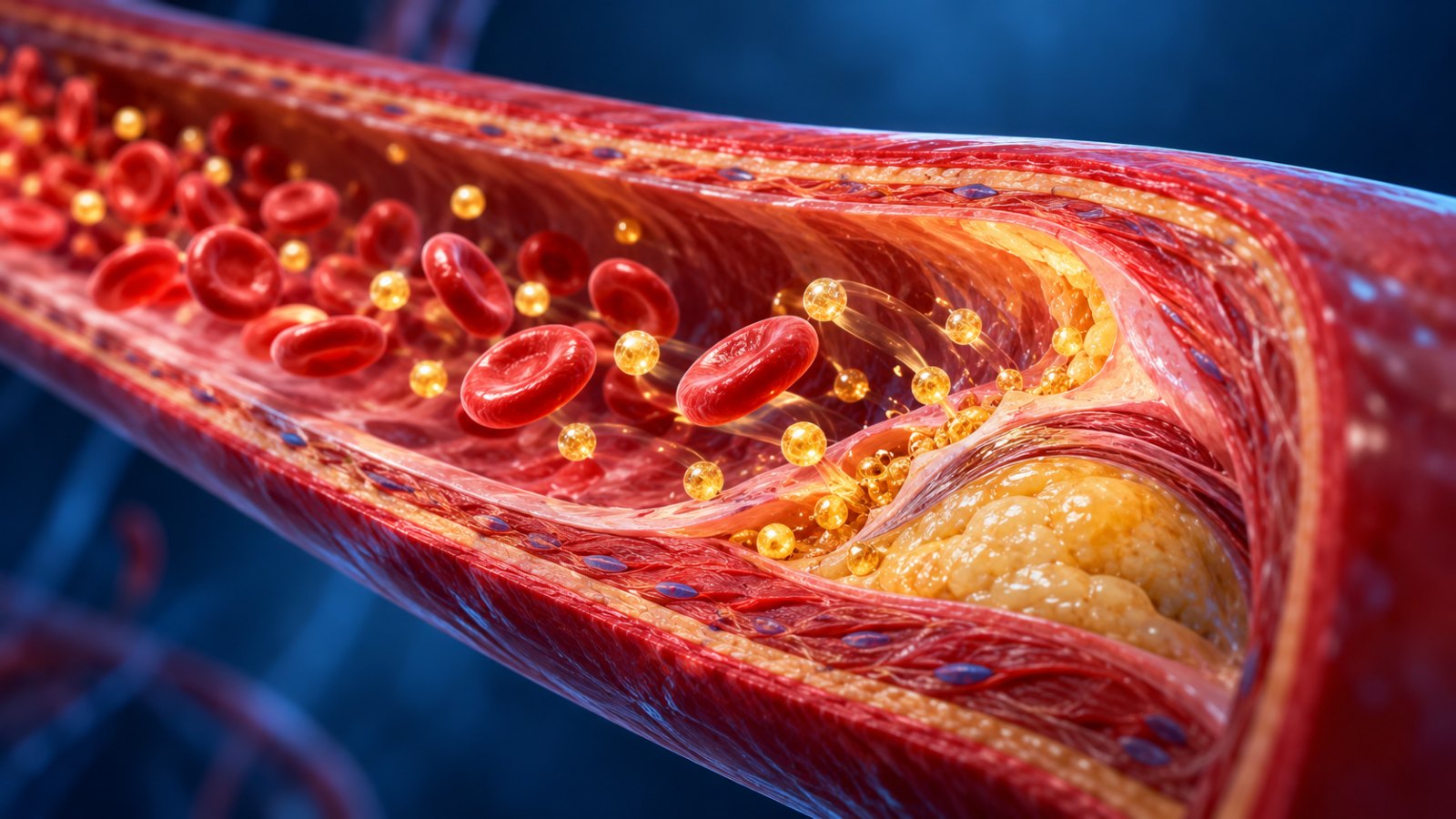
Every week, someone hands me a lipid report with every value printed in reassuring black ink, nothing flagged in red, and says, “My cholesterol is normal, so why did I have a heart attack?”
It is a fair question, and the honest answer is uncomfortable: the “normal range” on your lab report was never designed to protect your heart. For many Indians, especially those with diabetes, a family history or an existing heart problem, a “normal” LDL cholesterol can still be far too high. And one of the most powerful inherited risk factors, lipoprotein(a), is not even part of a routine lipid profile.
In this article, I will walk you through how to read your cholesterol report the way a cardiologist does, explain the targets that actually matter, and clear up the myths about statins that stop so many people from taking a medicine that could save their life.
Anil (name changed), a 39-year-old non-smoking bank officer from Greater Noida, came to the emergency room with a heart attack. His LDL was 118 mg/dL, inside the lab’s “normal” range. His father had a bypass at 52. When we tested his lipoprotein(a), it was more than three times the risk threshold. Nobody had ever checked it.
The reference range printed on a lab report is usually based on what is common in the population, or on generic thresholds for low-risk people. But in a country where heart disease is common, “common” is not the same as “healthy”.
Cardiologists do not judge cholesterol in isolation. We first ask: how high is this person’s overall risk of a heart attack or stroke? Then we set a target. The higher your risk, the lower your LDL cholesterol needs to be. An LDL of 110 mg/dL might be acceptable for a healthy 30-year-old with no risk factors, but it is clearly too high for a 50-year-old with diabetes and a stent.
There is no single “normal” cholesterol. There is only the right cholesterol for your heart.
The principle behind every modern cholesterol guidelineThe “bad” cholesterol that enters the artery wall and builds plaque. This is the number most treatment targets are based on.
Low HDL is a risk marker, but medicines that raise HDL have not reduced heart attacks. Focus on lowering LDL rather than chasing HDL.
Often high with belly fat, diabetes, refined carbohydrates and alcohol. They respond well to lifestyle change.
Total cholesterol minus HDL. It captures all the artery-clogging particles and is especially useful when triglycerides are high.
The table below summarises the commonly used targets from European cardiology guidelines and the Lipid Association of India. Your cardiologist will place you in the right category after assessing your full history.
| Your risk category | Typical examples | LDL target |
|---|---|---|
| Low to moderate risk | Young adults with no or few risk factors | Below 100 mg/dL |
| High risk | Diabetes without organ damage, multiple risk factors, very high single risk factor | Below 70 mg/dL |
| Very high risk | Previous heart attack, stent, bypass or stroke; diabetes with organ damage; significant plaque on imaging | Below 55 mg/dL (ESC) / below 50 mg/dL (LAI) |
| Extreme risk | Repeat events, or heart disease with additional high-risk features such as diabetes or very high Lp(a) | Around 30 mg/dL or lower, as advised |
Lipoprotein(a), pronounced “L-P-little-a”, is a cholesterol-carrying particle similar to LDL, but with an extra protein attached that makes it stickier and more likely to promote clotting and inflammation. High Lp(a) increases the risk of heart attack, stroke and narrowing of the aortic valve.
Here is what makes it different from other cholesterol numbers:
Elevated Lp(a) appears to be common in Indians, and it may help explain why some people with otherwise “perfect” habits develop early heart disease. While specific Lp(a)-lowering medicines are still being tested in large trials, knowing your level is valuable today: it tells us to be more aggressive with LDL lowering, blood pressure control and other risk factors.
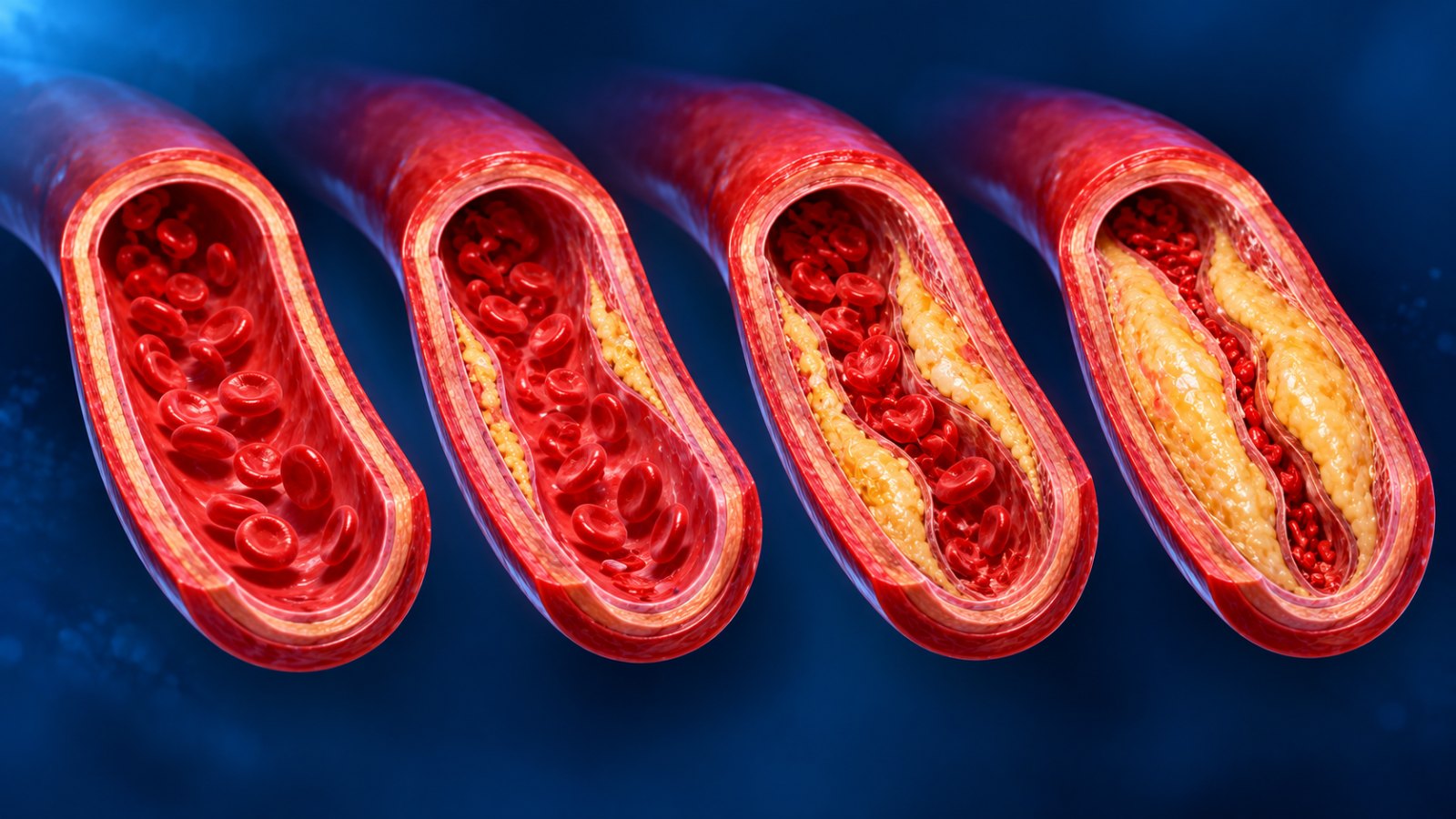
South Asians tend to develop coronary artery disease about ten years earlier than people of European descent, and often with more diffuse, multi-vessel blockages. Several factors combine: a higher tendency towards insulin resistance and diabetes, abdominal fat even at a “normal” body weight, higher triglycerides, smaller and denser LDL particles, higher Lp(a) in many people, and rapidly changing lifestyles with long sitting hours and processed food.
The practical message is simple: get your first lipid profile in your twenties, know your Lp(a), and do not wait for symptoms before taking cholesterol seriously. If you are unsure which symptoms matter, read our guide on the warning signs your heart may be giving you.
Statins lower LDL cholesterol and stabilise existing plaque. They have been studied in hundreds of thousands of people over more than three decades and consistently reduce heart attacks, strokes and deaths in people at risk. Yet fear of side effects is one of the most common reasons patients stop them. Let us look at the common concerns honestly.
If a statin alone does not bring LDL to target, or cannot be tolerated, there are effective add-ons: ezetimibe, a tablet that reduces cholesterol absorption; bempedoic acid; and injectable therapies such as PCSK9 inhibitors and inclisiran, which can lower LDL dramatically. Your cardiologist will choose based on your risk, response and budget.
After a successful angioplasty, Anil was started on a high-intensity statin plus ezetimibe, bringing his LDL below 50 mg/dL within three months. His brother and sister were tested too; one of them also had high Lp(a) and has now started early prevention. Sometimes the most important outcome of one person’s heart attack is protecting the rest of the family.
There is no single normal value. For low-risk adults, below 100 mg/dL is generally acceptable. For people with diabetes and other risk factors, below 70 mg/dL is advised, and for those with heart disease or a stent, below 55 mg/dL (or below 50 mg/dL as per Indian recommendations). Your cardiologist will define your personal target.
Lipoprotein(a) is a mostly inherited cholesterol particle that raises the risk of heart attack and stroke. Experts recommend that adults check it at least once in their lifetime, and especially those with early heart disease in themselves or their family.
Diet, exercise and weight loss can lower LDL modestly and improve triglycerides significantly. For people at low risk this may be enough. For those at high risk or with existing heart disease, lifestyle changes alone rarely reach the target, and medicines are usually needed.
Yes. Statins have been used by millions of people for decades. Most people tolerate them well, and serious side effects are uncommon. Any symptoms should be discussed with your doctor, who can adjust the dose or switch medicines.
For most people, a non-fasting test is acceptable and gives reliable LDL and non-HDL values. Fasting may be advised if your triglycerides were previously very high. Follow your doctor’s or lab’s instructions.
Most adults should have their first lipid profile in their twenties, and earlier if there is a family history of high cholesterol or early heart disease. Given the earlier onset of heart disease in Indians, early testing is especially worthwhile.
Bring your latest lipid report. Dr. Sanjeev Gera will assess your overall heart risk, set your personal targets and build a prevention plan that fits your life.
Fortis Hospital, Sector 62, Noida (Mon–Sat, 8:30 AM–5:30 PM) · Center for Heart, Spectrum Mall, Sector 75 (Mon–Sat, 7:00–9:30 PM)This article is for general education and does not replace a personal medical consultation. Do not start, stop or change any medicine without speaking to your doctor.
 +(91)9810466173
 info@drsanjeevgeracardiologist.com