For elderly individuals suffering from severe aortic stenosis, even simple tasks like walking across a room or climbing a few steps can feel overwhelming. Until recently, the only treatment was open-heart surgery, which is not always possible for older adults or those with multiple health issues.
Now, with Transcatheter Aortic Valve Replacement (TAVR), patients at high surgical risk have a safer, minimally invasive option. Delhi and Noida are leading hubs for TAVR in India, thanks to advanced cath labs, experienced cardiologists, and world-class healthcare infrastructure.
This blog explores how TAVR works, why Delhi–Noida is a preferred destination, real success stories, cost considerations, and FAQs.
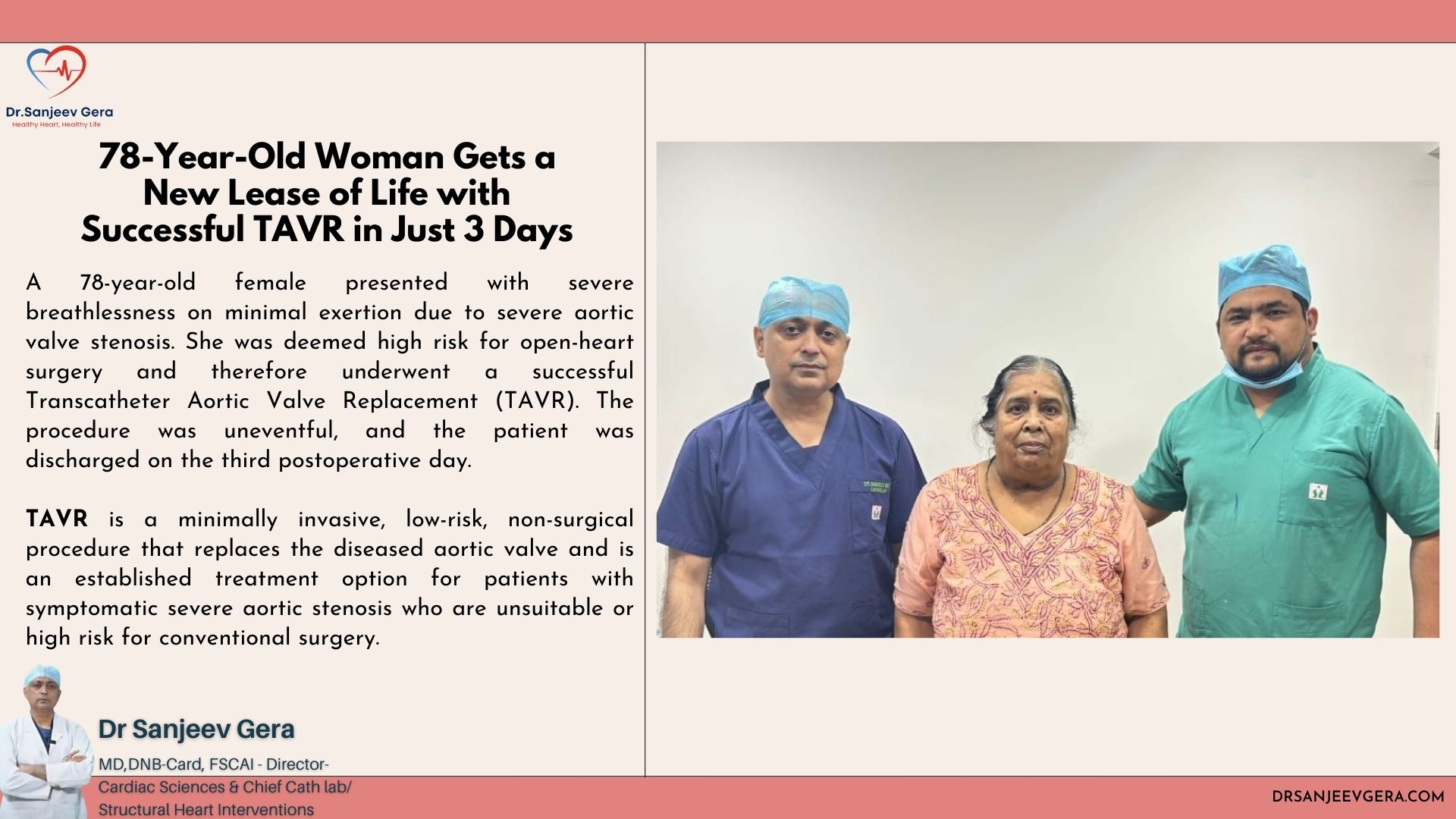
A 78-year-old woman in Delhi NCR struggled with severe breathlessness even at rest. Doctors diagnosed her with severe aortic stenosis – a dangerous narrowing of the heart valve that restricts blood flow.
Because of her age and health conditions, she was deemed high surgical risk and not suitable for open-heart surgery. Doctors recommended TAVR instead.
✅ The procedure was smooth and minimally invasive.
✅ Her symptoms improved immediately after valve replacement.
✅ She was discharged in just three days, able to return home and resume normal activities.
This case highlights the life-changing role of TAVR in Delhi–Noida, especially for patients who cannot undergo conventional surgery.
The aortic valve regulates blood flow from the heart to the body. In aortic stenosis, the valve becomes stiff and narrowed, forcing the heart to work harder.
Breathlessness on exertion
Chest pain or tightness
Dizziness or fainting spells
Severe fatigue
Palpitations
Without treatment, severe aortic stenosis can lead to heart failure and even sudden death.
Transcatheter Aortic Valve Replacement (TAVR) is a minimally invasive procedure that replaces the diseased aortic valve without the need for open-heart surgery.
A thin catheter is inserted through a small incision in the groin (femoral artery) and guided to the heart. A new artificial valve is then deployed inside the diseased valve, restoring normal blood flow instantly.
✅ No open chest surgery
✅ Ideal for patients at high surgical risk
✅ Faster recovery (3–5 days in hospital)
✅ Less pain and trauma
✅ Significant improvement in survival and quality of life
Delhi and Noida are now considered premier destinations for advanced cardiac procedures, including TAVR, because of:
World-Class Hospitals – Equipped with advanced cardiac cath labs and hybrid operating theatres.
Experienced Specialists – Senior interventional cardiologists with global training in valve replacement.
Comprehensive Care – Multidisciplinary teams of cardiologists, surgeons, anesthesiologists, and imaging experts.
Affordability – Costs in Delhi–Noida are lower than in Western countries, while maintaining international standards.
Proven Outcomes – Thousands of successful TAVR cases with excellent recovery rates.
Pre-Procedure Workup
Echocardiography, CT scans, and angiography assess valve anatomy.
Heart team evaluates if the patient is a candidate for TAVR.
Valve Placement
A catheter is guided into the heart via the femoral artery.
The new valve is deployed inside the old, diseased valve.
It begins functioning immediately.
Recovery
Most patients spend 2–3 days in hospital.
Recovery is quick and pain-free compared to surgery.
TAVR is recommended for:
Patients with severe symptomatic aortic stenosis
Elderly individuals unsuitable for open-heart surgery
Patients at high surgical risk because of age, diabetes, kidney disease, or other health issues
Increasingly, even intermediate-risk patients are being considered
Like any medical procedure, TAVR has potential risks such as vascular complications, bleeding, stroke, or irregular heart rhythms. However, in the hands of expert cardiologists in Delhi–Noida, complication rates are very low and outcomes are excellent.
The benefits of TAVR are immediate and long-lasting. Patients often report:
Relief from breathlessness
More energy and stamina
Ability to resume normal activities
Reduced hospital visits and complications
Most patients return to regular daily routines within 2–3 weeks.
1. What is TAVR?
TAVR (Transcatheter Aortic Valve Replacement) is a minimally invasive procedure to replace a diseased aortic valve without open-heart surgery.
2. Who should consider TAVR?
Patients with severe aortic stenosis who are at high surgical risk for open-heart surgery.
3. How long does the procedure take?
TAVR usually takes 1–2 hours under mild anesthesia.
4. How long will I stay in the hospital?
Most patients are discharged within 3–5 days.
5. How soon can I resume normal life?
Light activities can be resumed within a week, and full recovery takes 2–3 weeks.
6. How safe is TAVR?
TAVR has excellent safety records in Delhi–Noida hospitals, with success rates above 95%.
7. Which hospitals in Delhi–Noida offer TAVR?
Leading hospitals in Delhi and Noida with advanced cardiology departments and trained interventional cardiologists provide TAVR.
Patients across Delhi NCR choose senior cardiologists like Dr. Sanjeev Gera, who has extensive experience with structural heart interventions including TAVR. His team combines expertise, technology, and compassionate care to deliver safe and life-transforming results.
📍 Consult Dr. Sanjeev Gera
Senior Interventional Cardiologist & Director – Cardiac Sciences
Fortis Hospital, Noida (serving patients across Delhi NCR)
📞 Call: +91 98765 43210
📧 Email: info@drsanjeevgera.com
🌐 Website: www.drsanjeevgera.com
✨ Take the first step towards a healthier heart – book your appointment today!
 +(91)9810466173
 info@drsanjeevgeracardiologist.com